
Functional Appliances & Myofunctional Therapy Referrals in Shelby Township
*For new patients only. Patients transferring from another orthodontist: $250 consultation fee, credited toward treatment if they start here.
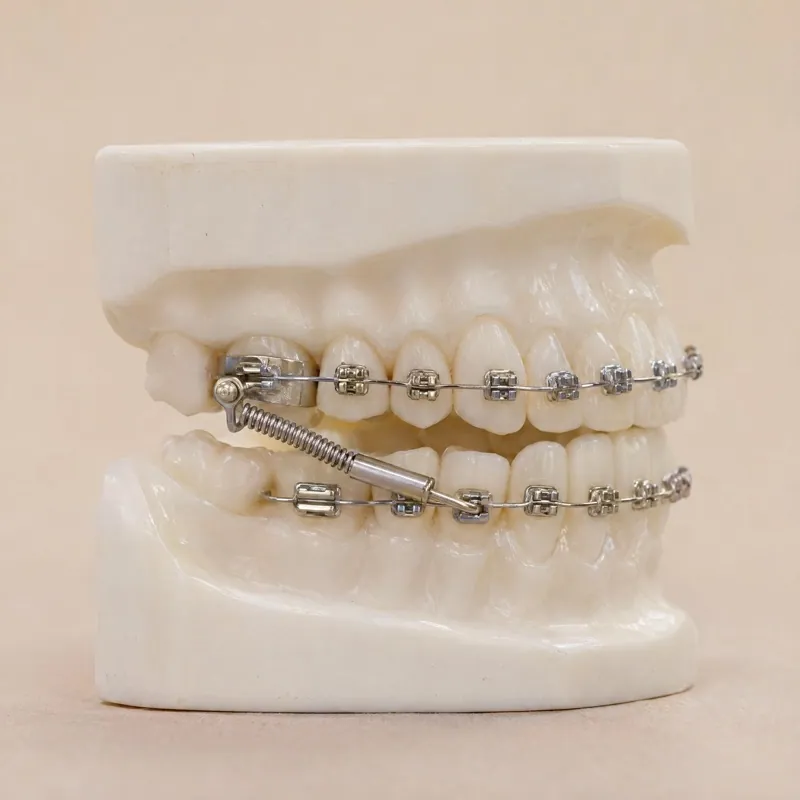
Orthopedic Appliances vs. Myofunctional Therapy
The word functional can describe two related but distinct approaches to treatment. Orthopedic appliances apply controlled forces to the teeth and growing jaws to influence skeletal and dental development. Orofacial myofunctional therapy (OMT) focuses on the function and habitual patterns of the tongue, lips, facial muscles, breathing, and swallowing.
Myofunctional therapy may be considered when a patient shows patterns such as tongue thrust, abnormal tongue resting posture, difficulty maintaining a comfortable lip seal, persistent open-mouth posture, or atypical swallowing. These muscle and functional patterns can coexist with malocclusion and may continue to influence the teeth and surrounding structures even as orthodontic treatment corrects the bite.
How Myofunctional Therapy Works With Orthodontics
Orthodontic treatment addresses the position of the teeth, the bite, and, in growing patients, the developing jaws. Myofunctional therapy addresses the functional patterns of the tongue, lips, and orofacial muscles. When appropriate, addressing both structure and function can provide a more comprehensive approach to treatment.
Myofunctional therapy typically involves individualized exercises and behavioral training designed to improve tongue resting posture, swallowing patterns, lip function, and other orofacial habits. It does not replace orthodontic treatment when a skeletal or dental correction is needed, and it is not necessary for every patient.
A Collaborative Approach
Dr. Fredal evaluates each patient individually for the dental, skeletal, and functional factors that may affect treatment. When a significant myofunctional concern is identified and additional therapy may help, Fredal Orthodontics may recommend a referral to an appropriately trained myofunctional therapist or speech-language pathologist for further evaluation and treatment.
When indicated, this collaborative approach lets orthodontic treatment address the teeth and jaws while the appropriate provider evaluates and manages the underlying oral muscle and functional patterns.
Frequently Asked Questions About Functional Appliances
Which functional appliances does Dr. Fredal use?
Dr. Fredal prefers the Herbst appliance and will also use a MARA. Both attach to the back teeth, and he uses them for jaw advancement, which brings the lower jaw forward. He also uses the Forsus spring. A Herbst or MARA appliance is included in the treatment fee.
Are there extra charges for the appliances a case needs?
No. The treatment fee at Fredal Orthodontics covers every appliance a case needs, so there is no separate charge for a Herbst, a MARA or a Forsus spring. The fee does not change with how long treatment takes. Dr. Fredal gives you the exact treatment cost in writing at the consultation.
Does Fredal Orthodontics provide myofunctional therapy?
No. Myofunctional therapy is not offered in the office. When supervised retraining is indicated, Dr. Fredal refers patients to trusted local myofunctional therapists. His treatment addresses the teeth and the bite, while the therapist works on the muscle and functional patterns. He also refers to an ENT, typically Dr. Thottam, when he finds concerning airway signs.
Does Dr. Fredal fit habit appliances?
Yes. Dr. Fredal fits habit appliances, which are small appliances worn in the mouth for an oral habit. Like any appliance a case needs, a habit appliance is part of the treatment fee. When tongue posture or an oral habit is present, he may also refer to a local myofunctional therapist.
How does Dr. Fredal decide whether a functional appliance is needed?
He decides from your records. For new patients the consultation is free: a 3D CBCT scan, an iTero digital scan and clinical photographs. Patients transferring from another orthodontist pay a $250 consultation fee, credited toward treatment if they start here. Dr. Fredal reviews the complete records with you, and looks at the dental, skeletal and functional factors that may affect treatment.
Is a Functional Appliance Right for Your Child?
The free consultation at Fredal Orthodontics includes a 3D CBCT scan, an iTero digital scan and photos. Dr. Fredal reviews the records with you, then gives you his recommendation and the exact cost in writing. Community discounts apply.
*For new patients only. Patients transferring from another orthodontist: $250 consultation fee, credited toward treatment if they start here.