
Mouth Breather? Face, Jaw and Airway Checks in Shelby Township
*For new patients only. Patients transferring from another orthodontist: $250 consultation fee, credited toward treatment if they start here.
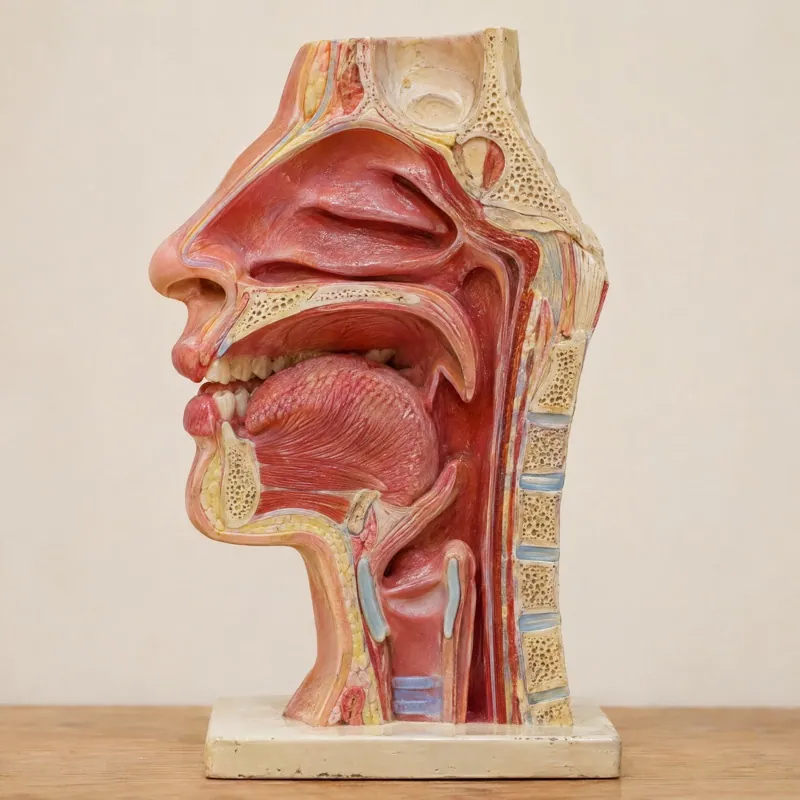
Mouth Breathing and Sleep Signs Reviewed at Your Consultation
Airway Screening at Every New-Patient Consultation
Orthodontic specialist Dr. Thomas Fredal Jr. includes an airway screening in every comprehensive orthodontic consultation at Fredal Orthodontics. An i-CAT CBCT scan (a 3D X-ray) is part of the records. On it, Dr. Fredal looks at the upper airway in 3D. He checks its overall shape and its minimum cross-sectional area (its size at the narrowest point).
He also checks for enlarged tonsils and adenoids (tissue at the back of the nose) when they are visible. The screening covers the nasal airway, tongue posture (where the tongue sits at rest) and mouth-breathing patterns. It covers the structure of the face and jaws too.
This screening is not meant to diagnose obstructive sleep apnea (breathing that stops and starts again and again during sleep). Dr. Fredal bases treatment decisions on the orthodontic and skeletal (jaw bone) diagnosis. When sleep apnea is suspected or present, he makes those decisions with the right medical providers.
What Airway Care at Fredal Orthodontics Can Include
-
1
CBCT Airway Screening (Free at Consultation)
The CBCT scan is merged with an iTero Lumina digital scan of the teeth. The merged scans are used for 3D diagnosis and treatment planning.
-
2
ENT Referral (If Needed)
If the screening turns up concerning symptoms or structural findings, Dr. Fredal refers your child to an ENT (an ear, nose and throat doctor outside the practice), typically Dr. Thottam, for further evaluation.
-
3
Palatal Expansion (When Indicated)
When early treatment is indicated, Dr. Fredal uses growth-guided approaches such as palatal expansion while a child is still developing. A palatal expander is an appliance that sits across the palate (the roof of the mouth). The practice also offers the Invisalign Palatal Expander, and it was the first in Michigan to offer it.
For older teens and adults, the practice offers MARPE, an expander held in place with mini-screws. An oral surgeon outside the practice places the mini-screws.
-
4
Braces or Aligners (If Needed)
Most Phase 1 (early) treatments at Fredal Orthodontics combine a palatal expander with limited braces. In some cases, an expander alone is the most appropriate treatment. For full treatment, the practice offers Damon Ultima braces and Invisalign clear aligners.
-
5
Myofunctional Therapy Referral (When Indicated)
When tongue posture, oral habits or other functional concerns are present, Dr. Fredal may refer your child to a trusted local myofunctional therapist (a therapist for the muscles of the tongue, lips and face). The practice does not offer myofunctional therapy in-house.
Typical Treatment Timeline
| Stage | Duration | What Happens |
|---|---|---|
| Consultation & airway screening | 50 minutes | Records review, free CBCT airway screening |
| Phase 1 expansion | Active: 4–6 weeks; retention at least 6 months | Parents turn the expander’s screw at home once per day |
| Comprehensive treatment, if needed | About 12 to 18 months for many comprehensive cases | Braces or Invisalign. Dr. Fredal gives your own time estimate after he reviews your records. |
What to Expect at Your Consultation
-
Time with Dr. Fredal.
He spends 20 of the 50 minutes with you, and he personally conducts every consultation. -
Records.
A free 3D CBCT scan, an iTero digital scan and clinical photographs. -
Your review with Dr. Fredal.
He reviews the complete records with you and gives his treatment recommendation. -
The exact cost in writing.
You get the exact treatment cost in writing. -
Photo ID.
The practice asks for a photo ID at the new-patient consultation. -
What the visit costs.
The consultation is free for new patients. That includes a consultation about MARPE or other skeletal (jaw bone) expansion. If your child is in treatment with another orthodontist, a transfer consultation costs $250. It is credited toward treatment if you start here. A second opinion is free. A return consultation before treatment starts is free too, unless you missed a consultation as a no-show. Then it costs $100.
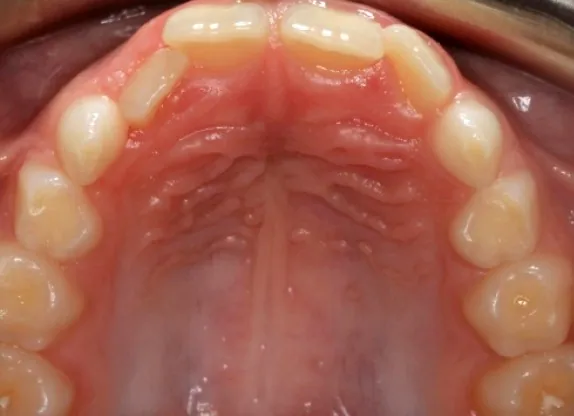
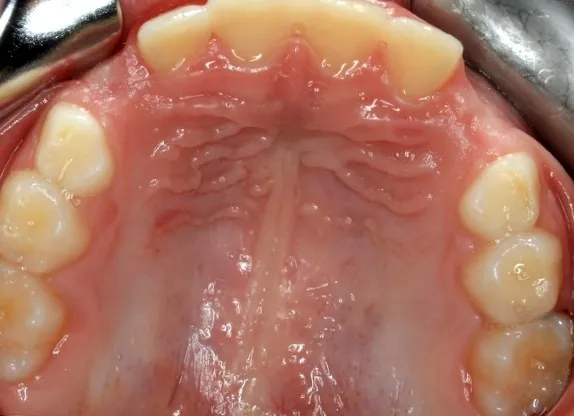
Before & After
How Much Does Treatment Cost at Fredal Orthodontics?
Phase 1 (early treatment): Palatal expander from $2,980 · Braces from $2,980 · Invisalign First from $3,480
Damon Ultima braces: from $5,280 (comprehensive)
Invisalign: from $5,280 (comprehensive)
Braces with MARPE (older teens and adults): from $10,080, priced as one package
Fees include every appliance a case needs, and they do not change with how long treatment takes.
Phase 1 and Phase 2 are not sold together. If your child goes on to Phase 2, $500 comes off the Phase 2 fee.
In-house financing has 0% interest and no credit check, with monthly payments from $179. Payment amounts vary with the treatment cost, down payment and financing terms.
The down payment is $500 for Phase 1, $750 for comprehensive braces or Invisalign, and $2,000 for braces with MARPE. Paying in full takes 5% off by cash, check or ACH (a bank transfer), or 3% by credit card, on your out-of-pocket portion.
Frequently Asked Questions About Mouth Breathing
What does Dr. Fredal look at on the 3D scan when a child mouth breathes?
Dr. Fredal evaluates the upper airway in three dimensions on the i-CAT CBCT scan. He looks at its minimum cross-sectional area and its overall anatomy. He also reviews the nasal airway anatomy, tongue posture and mouth-breathing patterns. The scan is part of the records at every new-patient consultation.
What does Dr. Fredal do about enlarged tonsils or adenoids?
He refers your child to an ENT when the findings concern him. An ENT is an ear, nose and throat doctor outside the practice. For these referrals, that is typically Dr. Thottam.
Dr. Fredal evaluates tonsil and adenoid enlargement on the i-CAT CBCT scan when it is visible. He refers the patient on when he finds concerning symptoms or structural findings. His own treatment decisions rest on the orthodontic and skeletal diagnosis.
Does mouth breathing change which treatment Dr. Fredal recommends?
It can. Dr. Fredal evaluates the airway along with the bite, facial balance, skeletal relationships, supporting bone and long-term stability.
He says those considerations can change decisions such as whether to expand, remove teeth, guide growth, use braces or Invisalign, combine the two, or recommend surgery or care with another specialist. He gives his recommendation after he reviews the complete records with you.
Related Conditions
Concerned About Your Child’s Breathing?
Book a free new-patient visit with Dr. Fredal in Shelby Township. It includes the airway screening. Community discounts take $250 off what you pay after insurance. One applies per patient, with ID proof. They are for military members and veterans, teachers and school staff, and first responders. So are healthcare workers, students and other family members in treatment.
*For new patients only. Patients transferring from another orthodontist: $250 consultation fee, credited toward treatment if they start here.