
Tongue Thrust Treatment in Shelby Township
A tongue thrust is when the tongue pushes against or between the front teeth during a swallow. Orthodontic specialist Dr. Thomas Fredal Jr. treats children from age 7, teens and adults at Fredal Orthodontics in Shelby Township.
Dr. Fredal looks at the tongue habit and the bite together and coordinates habit correction alongside orthodontic treatment so the result holds. When the airway screening finds a concern, he also refers the patient to an ENT (an ear, nose and throat doctor).
*For new patients only. Patients transferring from another orthodontist: $250 consultation fee, credited toward treatment if they start here.
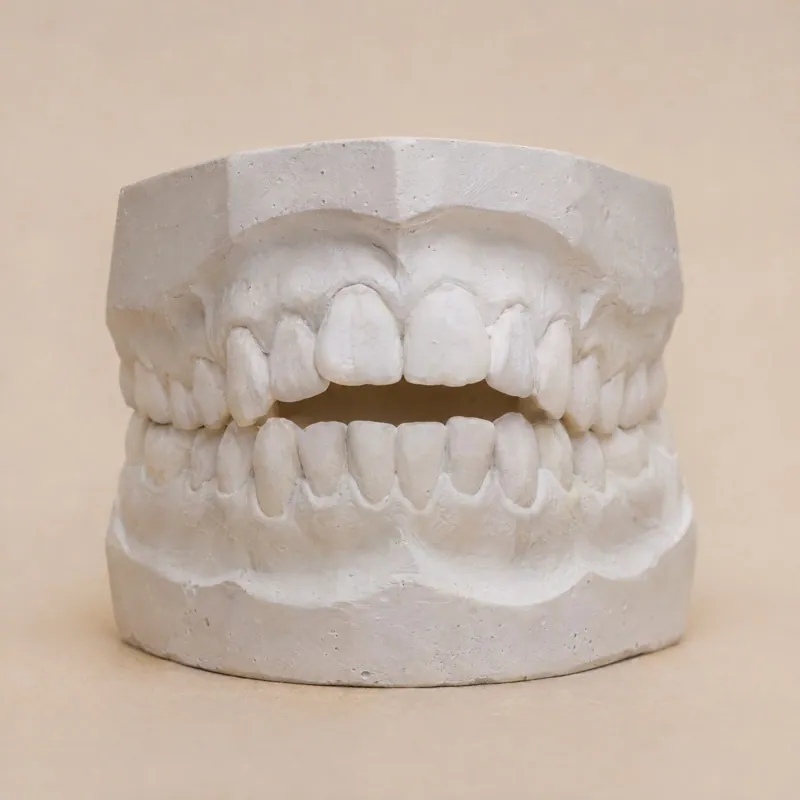
What Is Tongue Thrusting?
Tongue thrusting, or tongue thrust, is also called a reverse swallow or an immature swallow. During a swallow, the tongue pushes forward against or between the front teeth. It does this instead of pressing up against the palate, the roof of the mouth.
Types of Tongue Thrust
Tongue thrust is often named by where the tongue pushes during a swallow.
Anterior Tongue Thrust
Anterior means front. The tongue pushes forward against or between the upper and lower front teeth.
Lateral Tongue Thrust
Lateral means side. The tongue pushes out against or between the back teeth, on one side or on both.
Tongue Posture at Rest
Tongue posture is where the tongue rests between swallows. In a low tongue posture, the tongue rests on the floor of the mouth instead of up against the palate.
ENT and Myofunctional Therapy Referrals
Airway screening is part of every comprehensive orthodontic consultation at Fredal Orthodontics. When airway or nasal obstruction is suspected, two referrals may follow: one to an ENT and one to a myofunctional therapist. Both may happen at the same time as orthodontic treatment. Neither has to be finished first.
Open Bite Treatment at Fredal Orthodontics
An open bite is a gap between the upper and lower front teeth when the back teeth are closed. At Fredal Orthodontics, open-bite treatment depends on the cause and severity of the bite problem.
Depending on the patient, Dr. Fredal may use Invisalign or braces. He may also use posterior intrusion, which moves the back teeth deeper into the jawbone, or TADs (temporary anchorage devices), small temporary mini-screws that act as anchors. He does not place TADs himself. When a case needs one, the placement is referred out.
A more significant skeletal open bite (one involving the jaw bones) may require an interdisciplinary approach, with care from several specialists. That can include an evaluation for orthognathic surgery (jaw surgery) when appropriate.
Retainers After Treatment
Retention is the stage after treatment when retainers hold the teeth in place. Fredal Orthodontics starts patients in retainers full time for the first 1 to 3 months, then transitions them to nighttime wear for life. For open-bite cases, retention is individualized: Dr. Fredal may recommend fixed upper and/or lower retention on a case-by-case basis, in addition to removable retainers.
Myofunctional therapy may continue during braces or aligners. If your myofunctional therapist recommends it, therapy may also continue after treatment ends.
How Fredal Orthodontics Treats Tongue Thrust
Treatment addresses both the habit and its dental consequences in a coordinated way. Orthodontic treatment, myofunctional therapy, and ENT evaluation may be recommended concurrently when indicated: orthodontics corrects the dental and skeletal problem, while habit work and habit-control appliances address the functional patterns that contributed to it and that could affect long-term stability.
-
1
Identify and Treat Underlying Causes
Airway concerns are checked, such as mouth breathing and enlarged adenoids (tissue at the back of the nose) or tonsils. So is a restrictive tongue-tie (a short, tight band of tissue under the tongue). When one is present, the structural cause is addressed, often alongside orthodontic treatment rather than before it.
When airway concerns are found, Dr. Fredal coordinates with ENT and myofunctional specialists.
-
2
Myofunctional Therapy When Indicated
Myofunctional therapy is not offered in-house at Fredal Orthodontics. When supervised retraining is indicated, the practice refers patients to trusted local therapists who provide it.
-
3
Habit-Control Appliances When Needed
When a fixed reminder helps during active treatment, Dr. Fredal uses habit-control appliances such as tongue tamers, lingual turbos, or a tongue crib for the shortest interval that accomplishes the goal.
A habit-control appliance is a small appliance in the mouth that acts as a fixed reminder. A tongue crib is a small wire gate that sits behind the upper front teeth. Lingual means on the tongue side of the teeth.
-
4
Orthodontic Bite Correction Alongside Habit Retraining
While the swallow pattern is being retrained, braces or clear aligners close the open bite. Fredal Orthodontics uses Damon Ultima braces and Invisalign clear aligners.
Typical Treatment Timeline
| Stage | How Long or When | What Happens |
|---|---|---|
| Consultation and records | 50 minutes | Free CBCT scan (a 3D X-ray), iTero scan and photos, with airway screening |
| Underlying causes, when present | Often alongside orthodontic treatment | Treated when present; ENT referral for concerning findings |
| Myofunctional therapy (when indicated) | Alongside orthodontic treatment | With a trusted local therapist |
| Habit-control appliance (when needed) | During active treatment, for the shortest interval that accomplishes the goal | Tongue tamers, lingual turbos or a tongue crib |
| Braces or Invisalign | About 12 to 18 months for many comprehensive cases | Dr. Fredal gives you an estimate after he reviews your records |
| Retainers | After treatment | Braces: one set of Essix (clear plastic) retainers is included at the end of comprehensive treatment. Invisalign: Vivera retainers are ordered |
What to Expect at the Consultation
-
Time.
The consultation takes 50 minutes. You spend 20 of them with Dr. Fredal. He personally conducts every consultation. -
Records.
A free CBCT scan on the i-CAT FLX V17, an iTero Lumina digital scan of the teeth and clinical photographs. -
Your review with Dr. Fredal.
He goes over your complete records with you. Then he gives his treatment recommendation. -
Referral coordination.
When myofunctional therapy is indicated, the referral is arranged and coordinated with the orthodontic plan. -
The exact cost in writing.
You get the exact treatment cost in writing. -
Fees.
The consultation is free for new patients. If you are in treatment with another orthodontist, a transfer consultation costs $250, credited toward treatment if you start here. A second opinion on treatment you are having elsewhere is free. A return visit before you start treatment is free too, unless you missed a consultation as a no-show; then it costs $100.
How Much Does Tongue Thrust Treatment Cost?
Habit-control appliances: included in the treatment fee, like every appliance your case needs
Damon Ultima braces: from $5,280 (comprehensive)
Invisalign: from $5,280 (comprehensive)
Phase 1 (early treatment) for children: braces from $2,980, Invisalign First from $3,480
Comprehensive fees have three levels, by case complexity: $5,280, $6,880 and $7,175. Your fee does not change with how long treatment takes.
Insurance & Financing
Fredal Orthodontics is in network with Delta Dental PPO, a preferred provider (PPO) plan. For its other accepted PPO plans, the team files your claims on your behalf as a courtesy. The team takes your insurance card when you book, and you get your benefits verification in writing.
In-house financing has 0% interest and no credit check, with plans of up to 30 months. The lowest monthly payment the practice advertises is $179. Payment amounts vary based on treatment costs, down payment and financing terms. The down payment is $750 for comprehensive braces or Invisalign, or $500 for Phase 1.
Cherry financing, with down payments from $189.99, and CareCredit are also offered. Paying in full takes 5% off by cash, check or ACH (a bank transfer), or 3% by credit card, on your out-of-pocket portion. You can also use HSA or FSA funds (money in a health savings or flexible spending account).
Frequently Asked Questions About Tongue Thrust
What is a tongue crib?
A tongue crib is a small wire gate that sits behind the upper front teeth. It is one of the habit-control appliances Dr. Fredal may use. He uses one when a fixed reminder helps during active treatment, for the shortest interval that accomplishes the goal. Like every appliance your case needs, it is included in the treatment fee.
How is tongue thrust treated at Fredal Orthodontics?
Fredal Orthodontics takes a coordinated approach: airway, adenoid and tonsil, and tongue-tie causes are evaluated and treated when present; myofunctional therapy is arranged when supervised retraining is indicated; habit-control appliances such as tongue tamers are used during active treatment when a fixed reminder helps; and braces or clear aligners correct the bite. These steps proceed together rather than one strictly before another.
Is myofunctional therapy required for every case?
Not every case needs formal therapy. Myofunctional therapy is recommended when abnormal tongue posture, tongue thrust, swallowing patterns, or other oral habits are present, and it works alongside orthodontic treatment rather than before it. For cases with significant orofacial dysfunction, persistent lip incompetence, or a long-standing adult pattern, Dr. Fredal refers to a certified myofunctional therapist for a supervised retraining program.
Lip incompetence means the lips do not close comfortably at rest.
Can adults have tongue thrust?
Yes. For a long-standing adult pattern, Dr. Fredal refers to a certified myofunctional therapist for a supervised retraining program. Orthodontic correction for adults, with Damon Ultima braces or Invisalign, is coordinated the same way: habit work and bite correction proceed together. Fredal Orthodontics treats children, teens and adults.
How long does tongue thrust treatment take?
Many comprehensive cases run about 12 to 18 months. Dr. Fredal gives you an estimate after he reviews your records at the consultation. Habit work and bite correction proceed together rather than one before the other.
When a fixed reminder helps during active treatment, a habit-control appliance is used for the shortest interval that accomplishes the goal. Your fee does not change with how long treatment takes.
What retention follows tongue thrust treatment?
Retainers hold the teeth after treatment. Patients at Fredal Orthodontics wear them full time for the first 1 to 3 months, then at night for life. Retention for an open bite is individualized: Dr. Fredal may add fixed upper or lower retention, or both, case by case, alongside removable retainers.
For braces, one set of Essix (clear plastic) retainers is included at the end of comprehensive treatment. Invisalign patients have Vivera retainers ordered.
Related Conditions and Treatments
Concerned About a Tongue Thrust?
Book a free new-patient visit with Dr. Fredal in Shelby Township. Community discounts take $250 off the part you pay after insurance. One community discount applies per patient. You can combine it with the pay-in-full discount.
*For new patients only. Patients transferring from another orthodontist: $250 consultation fee, credited toward treatment if they start here.