
Orthodontic Technology in Shelby Township, MI
Dr. Thomas Fredal Jr. personally plans every case in 3D. He merges a CBCT scan (a 3D X-ray) with an iTero digital scan of the teeth.
*For new patients only. Patients transferring from another orthodontist: $250 consultation fee, credited toward treatment if they start here.
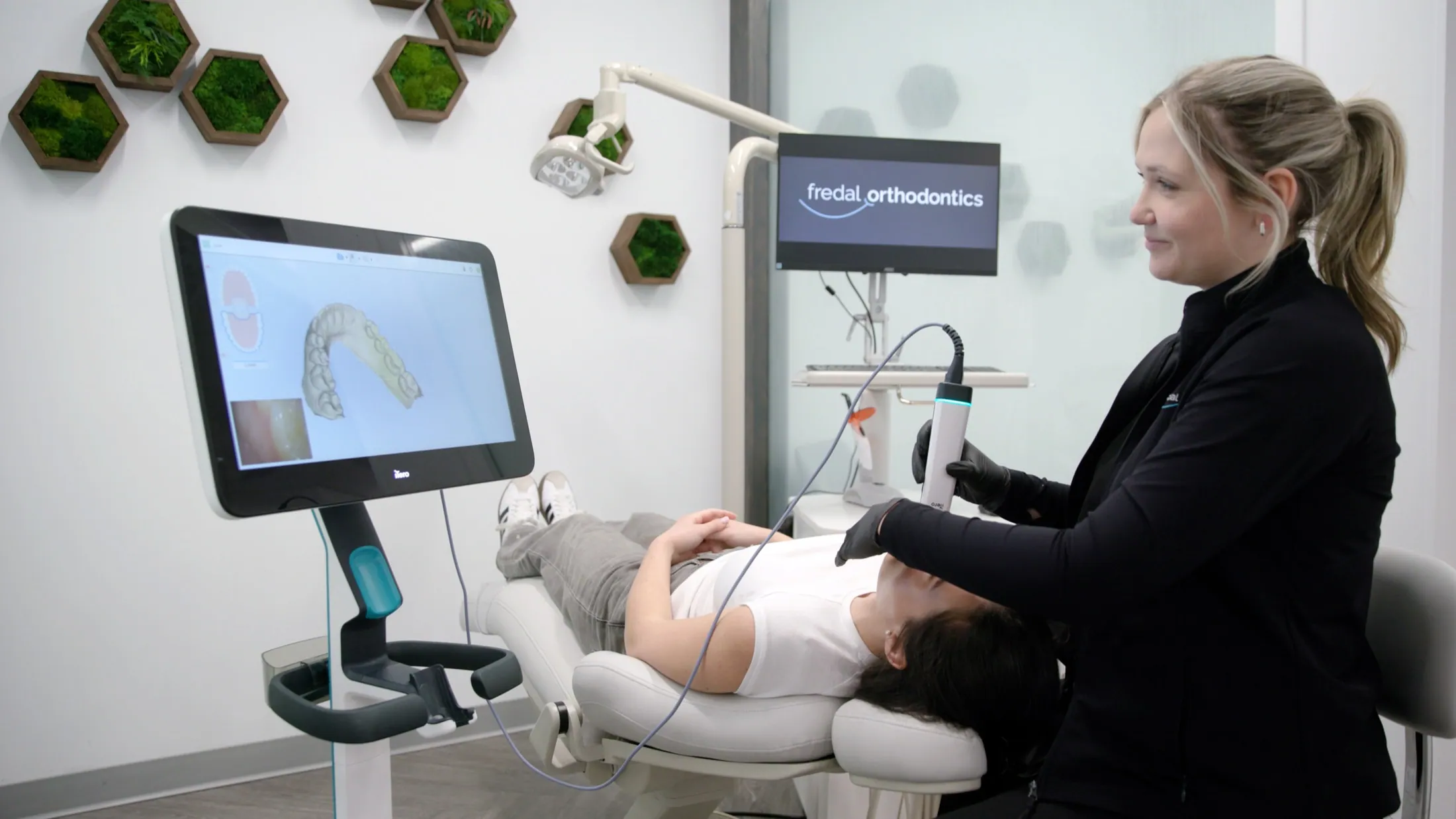
Fredal Orthodontics builds technology into every step of the patient experience. The tools range from digital scans and CBCT imaging to DIBS AI planning software, Damon Ultima braces and 3D-printed expanders (appliances that fit against the roof of the mouth). Dr. Fredal uses them to plan treatment around each patient.
3D Imaging and Airway Screening
i-CAT FLX V17
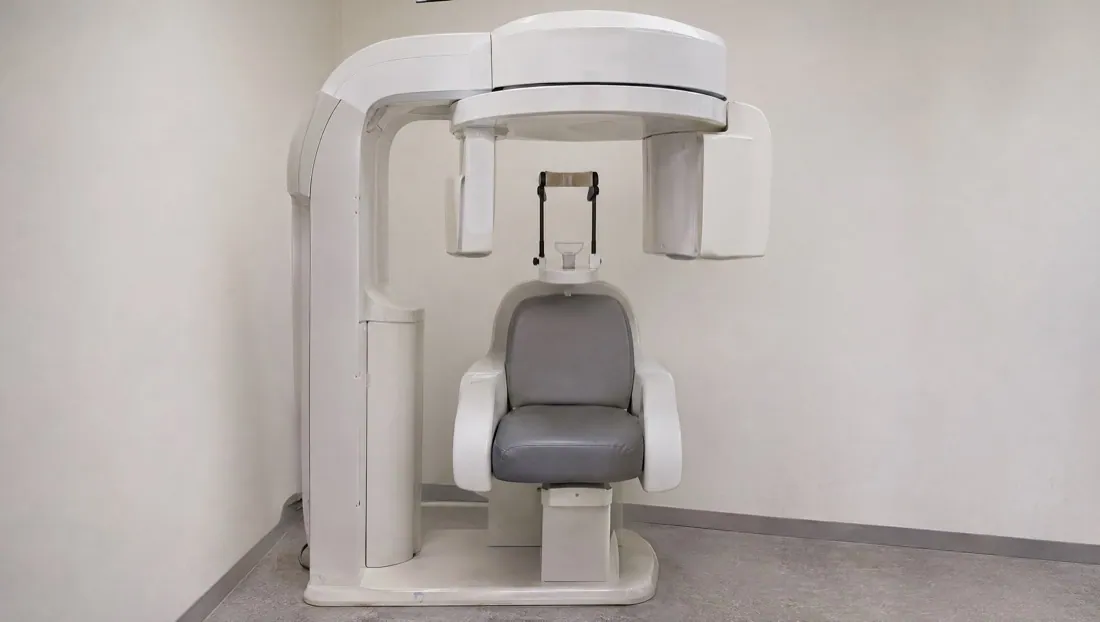
The office has an i-CAT FLX V17 CBCT scanner. A 3D CBCT scan is taken at every new-patient consultation. It shows Dr. Fredal the crowns and roots of the teeth, the bone around them, the jaws, the airway and the face.
Airway screening is part of every comprehensive orthodontic consultation. On the scan, Dr. Fredal checks the upper airway in 3D, including its narrowest cross-section. The screening does not diagnose sleep apnea. If he finds a concern, he refers the patient to an ENT (ear, nose and throat doctor), usually Dr. Thottam.
Digital Intraoral Scanning
iTero Lumina
The iTero Lumina is an intraoral scanner (a scanner that takes a 3D digital picture of the teeth from inside the mouth). Its digital impressions replace goopy impression material. Every new-patient consultation includes an iTero scan.
Dr. Fredal merges the iTero scan with the CBCT scan for a fully digital workflow. He uses the merged 3D record to diagnose and plan both Invisalign and braces treatment.
In-House 3D Printing
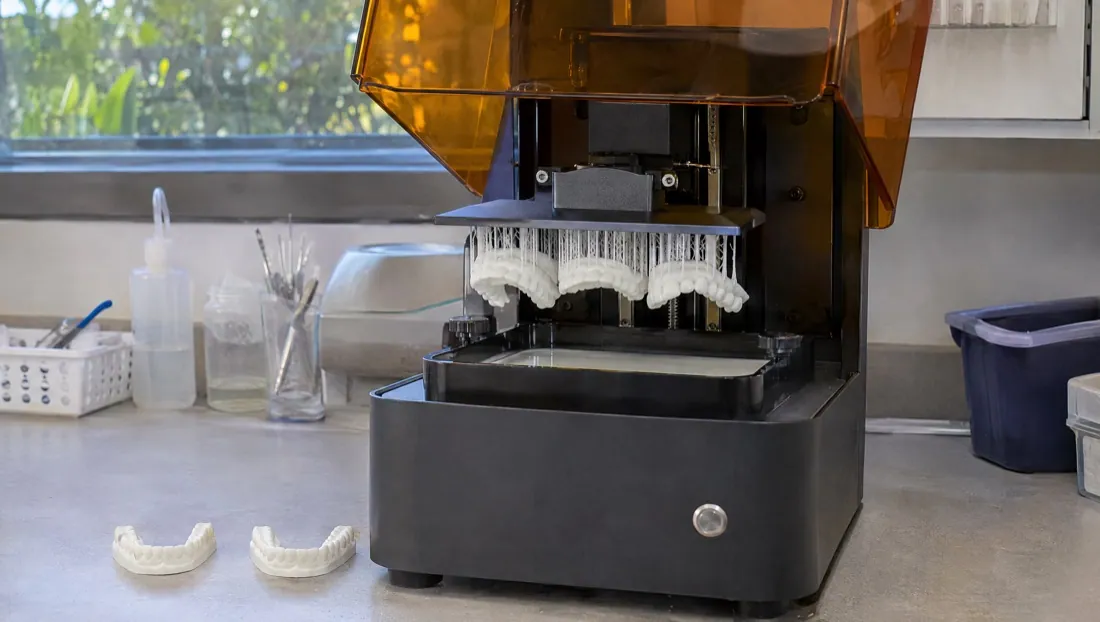
A SprintRay 3D printer in the office prints dental models. The team uses the models to make retainers and whitening trays in-house. Braces patients are scanned the day the braces come off, and their retainers are heat-formed over a printed model in the office. Essix retainers (clear plastic retainers) can be delivered the same visit, without waiting on an outside lab.
Digital Treatment Planning
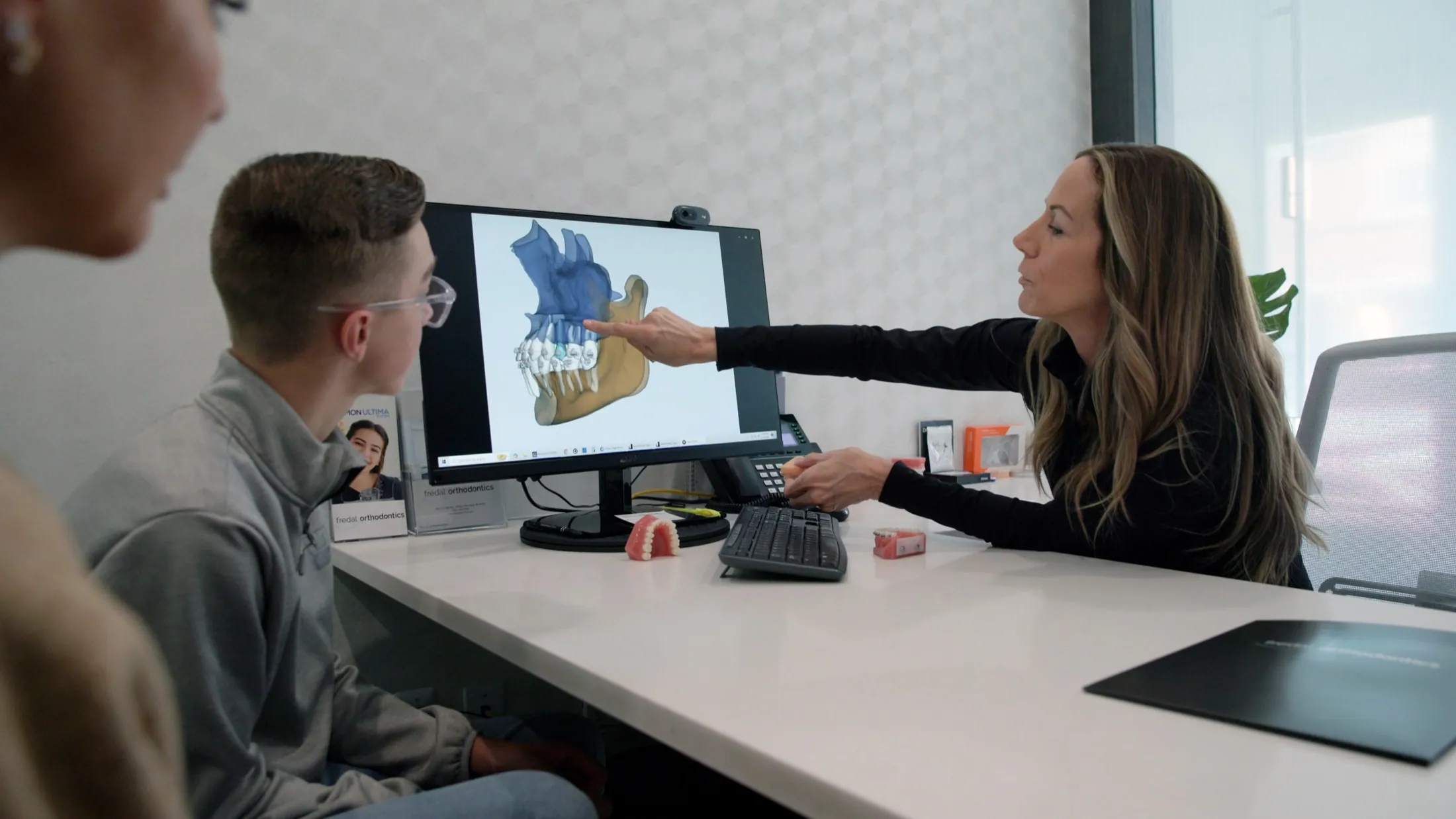
Dr. Fredal plans every comprehensive braces case (full treatment with braces) with DIBS AI. This software uses artificial intelligence (AI) to set where each bracket goes, based on his plan. He plans the Damon Ultima braces in 3D, from the merged CBCT and iTero scans. He maps each tooth movement on 3D models of the teeth and jaws before the brackets go on.
On all comprehensive braces cases, the brackets go on by indirect bonding. The brackets are set in a custom 3D-printed tray first, then placed on the teeth together. In Dr. Fredal’s view, the braces themselves do not replace a proper diagnosis.
Digital Orthodontic Planning: From 3D Imaging to Precise Bracket Placement
Modern orthodontic treatment can be planned in three dimensions before the braces are ever placed. At Fredal Orthodontics, an iTero digital scan captures a highly detailed model of the teeth and bite. That scan is combined with the patient’s i-CAT V17 CBCT, a specialized 3D X-ray, giving Dr. Fredal a detailed view of not only the visible teeth but also their roots, surrounding bone, and other important anatomy beneath the surface.
The two sets of information are brought together using DIBS AI digital orthodontic planning software. This lets Dr. Fredal plan bracket positions while looking beyond the visible crowns of the teeth. With the 3D X-ray information included, the roots and supporting bone are evaluated as the desired tooth positions and bracket locations are planned.
This is an important distinction. Traditional braces are bonded directly to the teeth based primarily on what the orthodontist can see at the bonding appointment. With DIBS AI, Dr. Fredal positions the teeth and brackets on the computer first, evaluates the planned result in three dimensions, and makes adjustments before the brackets ever go into the patient’s mouth.
Once Dr. Fredal has reviewed and approved the digital setup, custom 3D-printed indirect bonding trays are created to hold the brackets in their predetermined positions. The trays fit over the patient’s teeth and transfer the digitally planned bracket positions directly into the mouth. The planning does not stop at the computer: the trays reproduce that digital plan accurately on the patient’s teeth.
Fredal Orthodontics pairs this digitally planned workflow with Damon Ultima braces, giving precise control of tooth position and letting Dr. Fredal translate the digital plan into efficient, controlled tooth movement.
For parents and patients, the idea is straightforward: the practice can see more, plan more, and transfer that plan precisely to the patient before the first orthodontic wire begins moving the teeth. Rather than placing brackets and reacting to how the teeth move, this technology lets Dr. Fredal begin treatment with a detailed three-dimensional plan for where the teeth and their roots are intended to finish.
No orthodontic technology can guarantee a specific result or remove the normal differences in how each patient’s teeth and supporting tissues respond. Regular evaluation and adjustments by Dr. Fredal remain essential. This digital workflow provides better information, more deliberate bracket positioning, and a high level of precision, control, and predictability throughout treatment.
Remote Monitoring
Weave
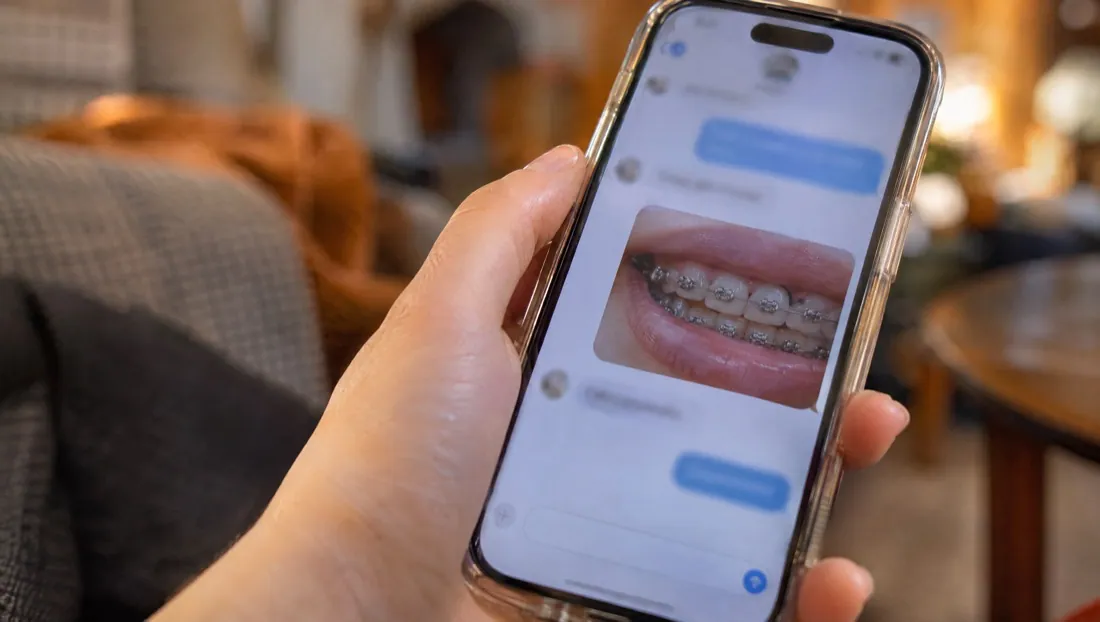
Every patient at Fredal Orthodontics has remote monitoring through Weave, with no monthly fee. Between visits, you can text photos and questions to the team at any hour. The clinical team reviews them during business hours and replies with next steps. That way, a broken bracket, a poking wire or an aligner that isn’t fitting can be addressed between appointments.
Practice Management System
Ortho 2 Edge
Fredal Orthodontics runs on Ortho 2 Edge, a practice management system (office software for patient records and scheduling). It links directly with Invisalign and with the i-CAT CBCT. New patients can complete their intake forms through the website, using Ortho 2 Edge.
What This Means for Patients
Every patient at Fredal Orthodontics is personally planned and supervised by Dr. Fredal. It is a private, single-doctor practice. The merged scans let him shape your plan around your bite, facial balance, skeletal relationships (how the jaws line up), supporting bone, smile and long-term stability.
In his view, straight teeth are only one part of the result. His goal is a healthy, working bite and a smile in balance with your face.
Additional Clinical Technology
Damon Ultima braces: self-ligating passive brackets (brackets with a built-in clip that holds the wire) with lightweight shape-memory wires.
Invisalign: the only aligner system Fredal Orthodontics uses. Every Invisalign case is planned from a 3D CBCT scan, not just a surface scan.
Invisalign Palatal Expander: removable, 3D-printed expansion trays for selected growing children, typically ages 7 to 12. Fredal Orthodontics was the first practice in Michigan to offer it.
Vivera retainers: Invisalign patients are scanned the day their attachments (small tooth-colored bumps bonded to the teeth) come off, and Vivera retainers are ordered.
Equipment Summary
| Category | Equipment | What It Does |
|---|---|---|
| 3D Imaging (CBCT) | i-CAT FLX V17 | Takes a 3D X-ray of the teeth, roots, jaws and airway at every new-patient consultation. Merged with the iTero scan for DIBS AI planning on comprehensive braces cases. |
| Intraoral Scanner | iTero Lumina | Takes a 3D digital impression of the teeth in place of goopy impression material. |
| 3D Printing | SprintRay | Prints models used to make retainers and whitening trays in-house. |
| Remote Monitoring | Weave | Lets patients share progress photos and questions with the team between visits. |
| Practice Management System | Ortho 2 Edge | Office software that links with Invisalign and the i-CAT CBCT. |
Frequently Asked Questions About Orthodontic Technology
Is a 3D CBCT scan taken at every new-patient consultation?
Yes, and there is no charge for it. The office scans every new patient on its own i-CAT FLX V17 CBCT machine as part of the consultation records, with an iTero digital scan and clinical photographs. Dr. Fredal then goes over the whole record with you, and gives his recommendation and the exact treatment cost in writing.
How are impressions of my teeth taken?
With an iTero Lumina scanner, not impression material. It records the shape of the teeth digitally, and every new patient is scanned at the consultation. Dr. Fredal merges that scan with the CBCT image into one 3D record, then plans braces and Invisalign cases from it. The retainers are also made from a scan.
What is DIBS AI, and when does Dr. Fredal use it?
DIBS AI is digital bonding software. It uses artificial intelligence to place each bracket in the position Dr. Fredal has planned. He uses it on every comprehensive braces case, working from the merged CBCT and iTero records. The brackets then go on by indirect bonding, which transfers them from a custom 3D-printed tray to the teeth in one step.
What does the practice print on its 3D printer?
Models. The SprintRay printer makes dental models, and the retainers and whitening trays are then formed over those models in the office. Because the model is made here, an Essix retainer can be ready at the visit when the braces come off, with no wait on an outside lab. Essix is the only retainer the office can deliver that fast.
Does every patient get remote monitoring, and what does it cost?
Every patient at Fredal Orthodontics has it, at no monthly cost. It runs through Weave: you text photos and questions to the office at any hour, and the clinical team answers during business hours with what to do next. That is how check-ins happen between scheduled appointments.
Is Invisalign planned from the 3D CBCT scan as well?
Yes. Dr. Fredal plans Invisalign from the CBCT scan merged with the iTero scan, not from a scan of the tooth surfaces alone. He reviews the roots and the supporting bone on that record before the plan is set. Invisalign is the only aligner system the practice uses, and he plans and supervises every case himself.
How These Technologies Apply to Each Treatment
See the full Invisalign workflow, from the first scan to retainers.
Dr. Fredal uses 3D CBCT imaging to check an impacted canine (a canine tooth that is stuck and has not come in), its root and the teeth beside it. The same scan supports his airway evaluation.
DIBS AI plans the bracket positions for comprehensive cases with metal Damon Ultima braces, and indirect bonding places them with a custom 3D-printed tray.
Estimate your cost with the braces cost calculator.
See It in Person
Your free consultation includes a 3D CBCT scan, an iTero scan and photos. The CBCT scanner is the i-CAT FLX V17. Dr. Fredal reviews all of your records with you himself. You get his recommendation and the exact cost of treatment in writing. Community discounts of $250 are also offered, one per patient. They come off your share of the cost after insurance.
*For new patients only. Patients transferring from another orthodontist: $250 consultation fee, credited toward treatment if they start here.